How Subaru Crosstrek AWD Performs on Slippery Roads
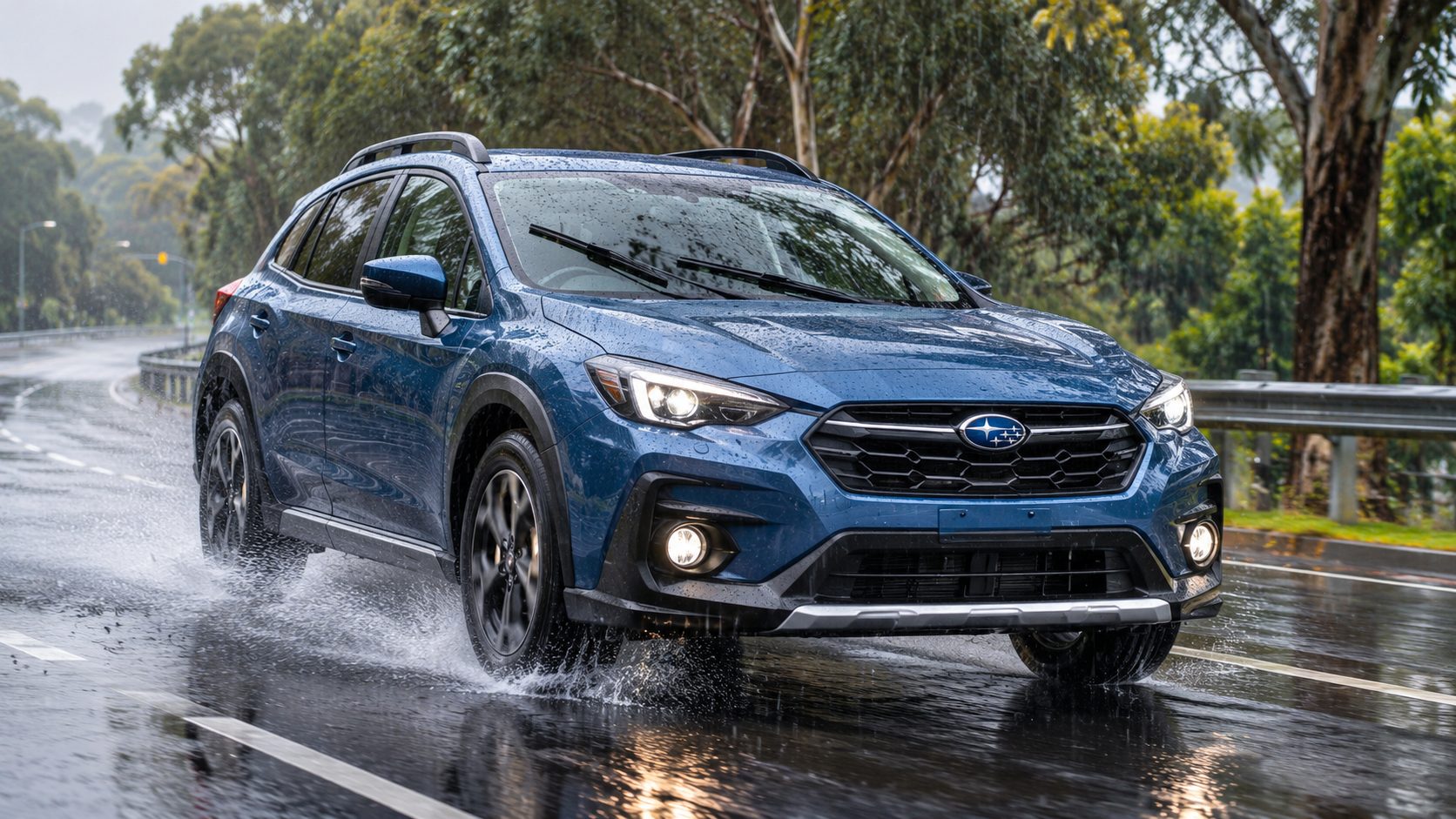
Wet roads can make everyday commuting more challenging, particularly during heavy rainfall, sudden braking and acceleration through slippery intersections. For Australian drivers who regularly encounter changing weather conditions, traction, vehicle stability and braking performance are important considerations when researching AWDs for sale.
The Subaru Crosstrek AWD combines Symmetrical All-Wheel Drive, electronic stability control and EyeSight Driver Assist technology to support everyday driving. Its all-wheel-drive system can distribute engine torque between the front and rear wheels as traction conditions change.
But how effective is the Subaru Crosstrek AWD during wet-weather commuting? Understanding its drivetrain, safety technology, tyres and practical limitations can help drivers determine whether it suits their daily travel requirements.
Subaru Crosstrek AWD Specifications for Wet-Road Driving
The Australian-market Subaru Crosstrek offers a 2.0-litre petrol engine and a hybrid powertrain, depending on the variant. Both use Symmetrical All-Wheel Drive and a Lineartronic continuously variable transmission.
The following specifications are based on the Australian MY26 Crosstrek range.
| Specification | Petrol AWD 2.0L | AWD Hybrid L | Wet-Road Relevance |
|---|---|---|---|
| Drivetrain | Symmetrical AWD | Symmetrical AWD | Traction distribution |
| Engine | 2.0L Boxer petrol | 2.0L e-Boxer hybrid | Everyday acceleration |
| Engine power | 115 kW | 100 kW | Power delivery |
| Engine torque | 196 Nm | 182 Nm | Acceleration response |
| Transmission | Lineartronic CVT | Lineartronic CVT | Smooth power delivery |
| Ground clearance | 220 mm | 220 mm | Uneven road clearance |
| Combined fuel consumption | 7.2 L/100 km | 6.5 L/100 km | Commuting efficiency |
| Standard tyre size | 225/60 R17 | 225/60 R17 | Tyre grip and condition |
| ANCAP safety rating | 5 stars (2025) | 5 stars (2025) | Crash safety assessment |
How Subaru Crosstrek AWD Performs on Wet Roads

The Subaru Crosstrek uses an Active Torque Split Symmetrical All-Wheel Drive system. Unlike vehicles that drive only two wheels under normal conditions, the Crosstrek can distribute driving torque between both axles.
During wet-weather acceleration, this arrangement can help manage traction when the available grip changes. However, the AWD system cannot eliminate wheel slip or overcome the physical limitations of tyres on slippery surfaces.
Key Wet-Road Performance Features:
● AWD system: Active Torque Split
● Traction: Power delivered through both axles
● Acceleration: Helps manage grip on slippery surfaces
● Stability: Supported by electronic control systems
● Road conditions: Suitable for normal wet-road commuting
● Limitation: AWD does not increase available tyre grip
Acceleration at Wet Intersections

Wet intersections can become slippery because of standing water, road markings and surface contamination. When accelerating from a stop, the Crosstrek's AWD system can help distribute driving torque rather than relying on one driven axle.
This can be useful when joining traffic, accelerating uphill or moving away from traffic lights. Drivers should still accelerate gradually because excessive throttle input can exceed the available grip.
Important Points:
● AWD can assist during acceleration.
● Smooth throttle inputs reduce unnecessary wheel slip.
● Painted road markings may provide reduced grip.
● Tire condition remains essential.
Braking Performance and Stability in Rain

The Subaru Crosstrek AWD includes anti-lock braking and electronic stability control systems. These technologies support vehicle control during braking and help manage instability when traction is reduced.
However, AWD does not provide a direct braking-distance advantage over an equivalent two-wheel-drive vehicle. Braking performance depends heavily on tyre condition, road surface, vehicle speed and available grip.
Key Braking and Stability Features:
● ABS: Helps prevent wheel lock during braking
● Electronic Stability Control: Assists with directional stability
● Traction Control: Helps manage excessive wheel spin
● Vehicle Dynamics Control: Coordinates stability functions
● Disc brakes: Ventilated front and rear discs
● Main limitation: Stopping distances increase when grip is reduced
Does AWD Improve Wet-Road Braking?

AWD primarily helps distribute driving torque. It does not create additional braking traction when all four wheels are slowing the vehicle.
For wet-road commuting, maintaining sufficient following distance and reducing speed before corners are more important than relying on AWD alone.
Important Points:
● AWD is not a substitute for effective braking.
● ABS helps maintain steering control during hard braking.
● Wet roads can increase stopping distances.
● Safe following distances should increase in rain.
EyeSight Driver Assist Technology in Wet Weather

The Australian Subaru Crosstrek includes EyeSight Driver Assist technology, which uses cameras to monitor road conditions and support selected driver-assistance functions.
These systems can assist during commuting, particularly in changing traffic conditions. However, heavy rain, poor visibility and obstructed cameras can reduce their effectiveness.
Key Driver Assistance Features:
● Pre-Collision Braking: Can assist with collision avoidance
● Adaptive Cruise Control: Helps maintain a selected following gap
● Lane Departure Warning: Alerts drivers to unintended lane departures
● Lane Centring: Provides steering assistance under suitable conditions
● Emergency Lane Keep Assist: Supports selected collision-avoidance situations
● Driver Monitoring System: Monitors signs of driver inattention
How Useful Is EyeSight During Heavy Rain?

EyeSight can provide additional assistance when visibility and road conditions allow its cameras to operate effectively. It should not be treated as a replacement for driver observation or judgement.
During heavy rainfall, drivers may need to manage speed, following distance and steering manually if assistance systems become limited or unavailable.
Important Points:
● Camera visibility affects system performance.
● Heavy rain can reduce detection reliability.
● Adaptive Cruise Control does not guarantee safe stopping distances.
● Drivers must remain attentive and in control.
Tyre Grip and Hydroplaning Resistance

Tyres are among the most important factors affecting Subaru Crosstrek AWD performance on wet roads. They provide the contact between the vehicle and the road surface, influencing acceleration, steering and braking.
The MY26 Crosstrek AWD 2.0L uses 225/60 R17 tyres, while selected higher variants use 225/55 R18 tyres. These dimensions identify tyre width, aspect ratio and wheel diameter, but they do not establish the wet-grip performance of a particular tyre.
Key Tyre Specifications:
| Specification | AWD 2.0L | AWD 2.0R |
|---|---|---|
| Tyre size | 225/60 R17 | 225/55 R18 |
| Wheel diameter | 17 inches | 18 inches |
| Tyre width | 225 mm | 225 mm |
| Tyre pressure monitoring | Standard | Standard |
Important Wet-Road Considerations:
● Tread depth: Affects water evacuation
● Tyre pressure: Should follow manufacturer recommendations
● Tyre compound: Influences wet-surface grip
● Standing water: Increases hydroplaning risk
● Vehicle speed: Higher speeds increase hydroplaning risk
● AWD limitation: Cannot prevent hydroplaning
Can the Subaru Crosstrek AWD Prevent Hydroplaning?
No. Hydroplaning occurs when water separates the tyre from the road surface, reducing or eliminating the contact needed for steering, braking and acceleration.
Although the Crosstrek has AWD and electronic stability systems, these cannot restore grip when the tyres lose effective road contact. Reducing speed and avoiding deep standing water remain essential precautions.
Ground Clearance and Driving Through Wet Conditions

The Subaru Crosstrek AWD has 220 mm of minimum ground clearance at kerb weight. This provides additional clearance over uneven surfaces and certain road obstacles compared with many lower passenger vehicles.
Ground clearance can be useful when navigating damaged roads, raised surfaces and shallow irregularities. However, it does not indicate a safe water-crossing depth or make the vehicle suitable for driving through flooded roads.
Key Ground Clearance Details:
● Minimum ground clearance: 220 mm
● Vehicle length: 4,495 mm
● Vehicle width: 1,800 mm
● Vehicle height: 1,600 mm
● Main advantage: Clearance over uneven surfaces
● Main limitation: No guaranteed floodwater capability
Is the Crosstrek Suitable for Flooded Roads?
The Crosstrek should not be driven through floodwater simply because it has AWD or 220 mm of ground clearance.
Floodwater can conceal damaged roads, strong currents and unexpected depth changes. AWD does not prevent water entering the engine, electrical systems or cabin.
Important Points:
● Avoid flooded roads.
● Do not use ground clearance as a water-depth rating.
● Follow road closure and emergency warnings.
● Choose an alternative route when flooding is present.
Fuel Efficiency During Daily Wet-Weather Commuting

Fuel efficiency is another consideration for drivers using the Subaru Crosstrek AWD for regular commuting. The Australian petrol and hybrid variants have different official combined-cycle fuel consumption figures.
The MY26 Crosstrek AWD 2.0L records 7.2 L/100 km, while the AWD Hybrid L records 6.5 L/100 km under Australian laboratory testing conditions.
Key Fuel Efficiency Specifications:
| Specification | Petrol AWD 2.0L | AWD Hybrid L |
|---|---|---|
| Combined consumption | 7.2 L/100 km | 6.5 L/100 km |
| Urban consumption | 9.4 L/100 km | 7.4 L/100 km |
| Fuel tank capacity | 63 L | 48 L |
| Minimum fuel grade | 91 RON | 91 RON |
Commuting Considerations:
● Petrol variant: Higher official combined fuel consumption
● Hybrid variant: Lower official combined fuel consumption
● Traffic conditions: Stop-start driving can affect fuel use
● Wet weather: Traffic delays and driving conditions can change consumption
● Driving style: Smooth acceleration supports efficiency
● Real-world results: May differ from official test figures
The hybrid variant may appeal to drivers prioritising fuel efficiency during frequent urban commuting. However, the best option depends on purchase cost, annual kilometres and actual driving conditions.
Is the Subaru Crosstrek AWD a Good Choice for Wet-Road Commuting?

The Subaru Crosstrek AWD provides a combination of all-wheel-drive traction, electronic stability systems and driver-assistance technology. These features make it a reasonable option for drivers regularly travelling on wet suburban roads and highways.
Its greatest wet-road benefit is additional traction management during acceleration. However, it remains subject to the same fundamental limitations involving braking distances, tyre grip, hydroplaning and poor visibility as other passenger vehicles.
Where the Crosstrek AWD Performs Well:
● Everyday wet-road commuting
● Acceleration on slippery surfaces
● Driving on wet inclines
● Suburban and highway travel
● Changing road-surface conditions
● Commuting with driver-assistance support
Where Drivers Should Be Cautious:
● Deep standing water
● Flooded roads
● Heavy rainfall with poor visibility
● Worn or incorrectly inflated tyres
● High-speed cornering on slippery roads
● Sudden braking on low-grip surfaces
Final Verdict: Is Subaru Crosstrek AWD Worth Considering for Rainy Commutes?
The Subaru Crosstrek AWD is a practical choice for Australian drivers seeking additional traction management during wet-weather commuting. Its Symmetrical All-Wheel Drive system, Vehicle Dynamics Control and EyeSight technology provide several useful features for everyday travel.
The 220 mm ground clearance, standard AWD drivetrain and available hybrid powertrain add to its versatility. The petrol AWD 2.0L offers 115 kW and official combined fuel consumption of 7.2 L/100 km, while the AWD Hybrid L achieves 6.5 L/100 km.
For drivers regularly encountering slippery intersections, wet hills and changing road surfaces, the Crosstrek AWD is worth considering. However, safe speed selection, good tyres, appropriate braking distances and avoiding floodwater remain more important than drivetrain capability alone.
For drivers considering the Crosstrek after reviewing its wet-road capabilities, the dedicated model listings provide a relevant next step. View All Crosstrek AWD Cars
Frequently Asked Questions
1. Is the Subaru Crosstrek AWD good for driving in rain?
Yes. Its Symmetrical All-Wheel Drive system can help manage traction during wet-road acceleration, while electronic stability systems support vehicle control.
2. Does Subaru Crosstrek AWD improve traction on slippery roads?
Yes. Active Torque Split AWD distributes driving torque between the front and rear axles, helping manage traction when road grip changes.
3. Does the Subaru Crosstrek AWD stop faster on wet roads?
Not necessarily. AWD primarily assists with driving traction rather than braking. Stopping distances depend on tyres, road conditions and vehicle speed.
4. Can the Subaru Crosstrek AWD hydroplane?
Yes. Like any vehicle, the Crosstrek can hydroplane when water reduces tyre contact with the road. AWD cannot eliminate this risk.
5. What is the ground clearance of the Subaru Crosstrek AWD?
The Australian MY26 Subaru Crosstrek has 220 mm of minimum ground clearance at kerb weight across the listed variants.
6. Does the Subaru Crosstrek AWD have traction control?
Yes. The Crosstrek includes traction and stability management functions within its Vehicle Dynamics Control system.
7. Is Subaru EyeSight effective during heavy rain?
EyeSight can assist when operating conditions permit, but heavy rain and reduced camera visibility may limit its functionality. Drivers must remain in control.
8. Is the Subaru Crosstrek AWD suitable for wet highway driving?
Yes. Its AWD and stability systems can support normal wet-highway driving. Drivers must still adjust speed and following distance to conditions.
9. What tyres does the Subaru Crosstrek AWD use?
The MY26 AWD 2.0L uses 225/60 R17 tyres. Selected higher variants use 225/55 R18 tyres. Tyre condition and wet-grip performance are important.
10. Is the Subaru Crosstrek AWD Hybrid more fuel-efficient than the petrol version?
Yes. The MY26 AWD Hybrid L has an official combined fuel consumption figure of 6.5 L/100 km, compared with 7.2 L/100 km for the petrol AWD 2.0L.
11. Can the Subaru Crosstrek AWD drive through flooded roads?
Drivers should avoid flooded roads. AWD and ground clearance do not guarantee safe water-crossing capability.
12. Is the Subaru Crosstrek AWD suitable for daily commuting in Australia?
Yes. It combines AWD traction, driver-assistance features and practical dimensions suitable for everyday commuting, including normal wet-road conditions.
Originally published on https://www.awdforsale.com.au/subaru-crosstrek-awd-slippery-roads/


Comments
Post a Comment